Featured Articles

Nvidia GTX 770 spec is out

Nvidia GTX 770 spec is out

In addition to the GK110 based Nvidia Geforce GTX 780, we managed to get some details regarding the GK104-based GTX 770…

More...
Nvidia Geforce GTX 780 detailed

Nvidia Geforce GTX 780 detailed

We managed to confirm the full spec of the upcoming Nvidia Geforce GTX 780 graphics card as well as some performance…

More...
AMD shares take rollercoaster ride

AMD shares take rollercoaster ride

In the last 52 weeks AMD was on a rollercoaster ride, with prices ranging from $1.81 to $6.46. Yesterday it closed…

More...
HIS iCooler Turbo HD 7790 reviewed

HIS iCooler Turbo HD 7790 reviewed

Today we’ll take a closer look at a factory overclocked HD 7790, courtesy of HIS. The HIS HD 7790 iCooler Turbo…

More...
Kingston DataTraveler Ultimate 3.0 Generation 3 (32GB) reviewed

Kingston DataTraveler Ultimate 3.0 Generation 3 (32GB) reviewed

High capacity USB drives have become commonplace a while ago, but although some memory outfits are peddling huge drives, up…

More...
Frontpage Slideshow | Copyright © 2006-2010 orks, a business unit of Nuevvo Webware Ltd.
Tuesday, 03 January 2012 14:22

Hackers in Space has plan for censorship free web

Written by Nick Farell

y globe

If it can afford the satellites

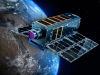
The Chaos Computer Club wants to create a censorship free internet by sticking its own satillites in space. Hackers at the Chaos Computer Club’s Chaos Communication Congress in Berlin proposed an initiative called the Hackerspace Global Grid (HGG), which aims to create and freely make available satellite based communication.

The outfit also says it wants to stick a hacker on the moon in 23 years, but their first goal is to deal with threats to the Internet like the proposed Stop Online Piracy Act (SOPA), by creating an “uncensorable Internet in space.” The project builds off of an earlier idea by Nick Farr in August for a Hacker Space Program.Armin Bauer is working on the communications infrastructure for the project with his team.

His background is with the Constellation platform that uses Internet-connected computers for aerospace related research. It is developing an idea for a network of low-cost ground stations for when the project gets low-orbit satellites up there. The stations would be there to pinpoint satellites and facilitate sending data back to earth.

Not sure where they will get the satellites from.


Nick Farell

E-mail: This e-mail address is being protected from spambots. You need JavaScript enabled to view it
blog comments powered by Disqus

To be able to post comments please log-in with Disqus


Facebook activity

Latest Commented Articles

Recent Comments