Index
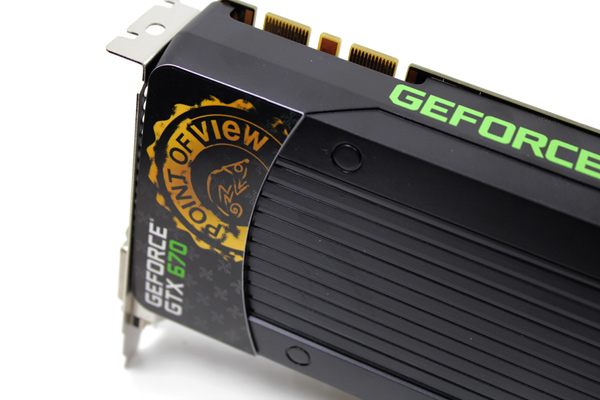
Point of View / TGT GTX 670 Ultra Charged graphics card has dual slot air cooling. It’s 24cm long. The only physical difference we noticed between the Ultra Charged’s cooler and Nvidia’s reference design is the plastic with Pont of View/TGT logo. 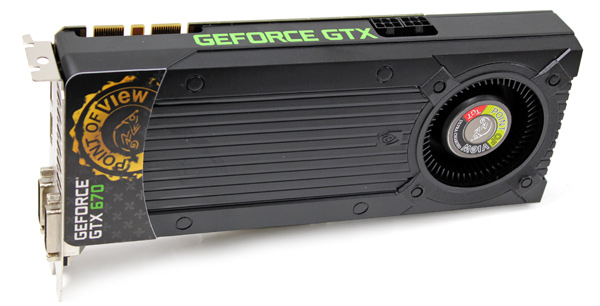
Below you can see Nvidia’s reference GTX 670 2GB graphics.
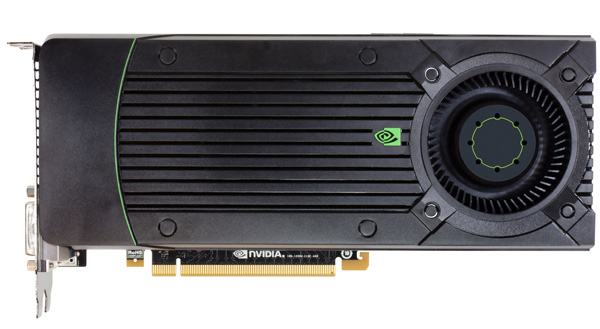
Nvidia GTX 670 2GB
Good thing about reference cooling is that it pushes air out of the case. Naturally, it won’t make a big difference if you have a single GTX 670, but SLI and three-way SLI setups will really love this when they get hot.
Underneath the shroud is a heatsink with a copper base. All the power components were moved towards the I/O panel and the blower style fan is at the opposite end.
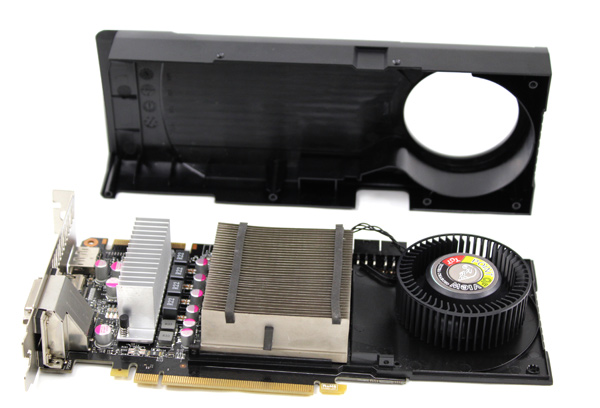
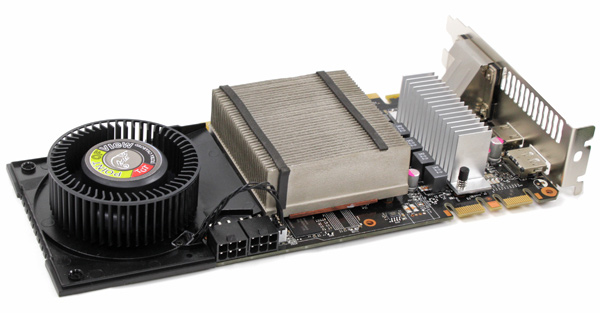
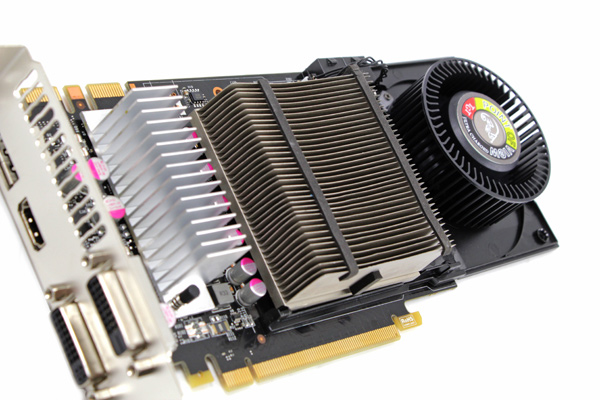
The fan is fixed to a plastic part that can be removed. GTX 670’s PCB is only 17.2cm long.
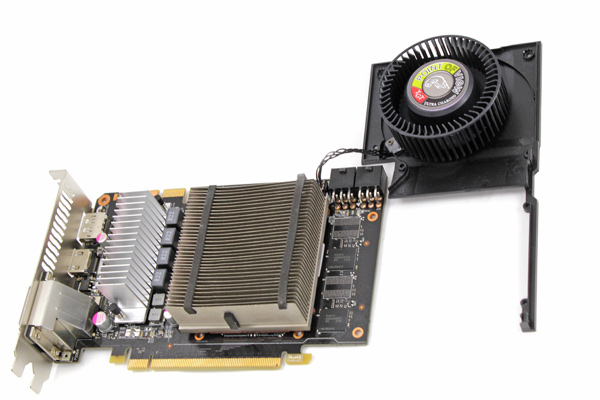
GTX 670 Ultra Charged is powered via two 6-pin power connectors, just like the reference GTX 670 card. The reference GTX 670’s TDP is at 170W, but the Ultra Charged’s clocks mean that we can expect higher TDP.
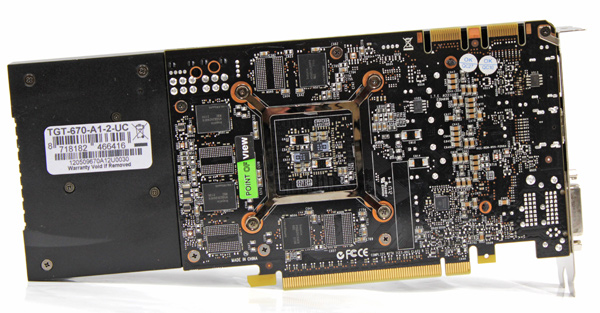
The card comes with 2GB of memory in eight memory modules. The modules are distributed in a way where each next module is on the opposite side of the PCB.
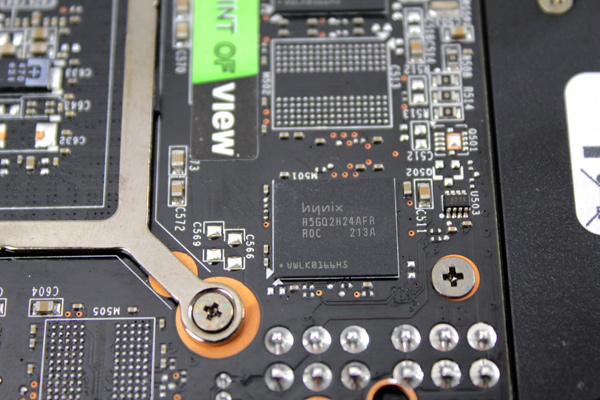
GTX 670 Ultra Charged runs Hynix memory chips (model No: H5GQ2H24AFR-R0C). The chips are specified to run at 1500MHz (6000MHz GDDR5 effectively).
Good news for is that the company kept the identical memory system used on its GTX 680 card, meaning four 64-bit memory controllers (256-bit memory interface), and 2GB of GDDR5 memory.
Memory clocks on GTX 680 and GTX 670 cards are identical – 1502MHz (6008MHz effectively). The Ultra Charged’s GPU is factory overclocked while the memory was left untouched.
Judging by OC results of all the GTX 680 and GTX 670 cards we’ve tested, overclocking the memory is a breeze.
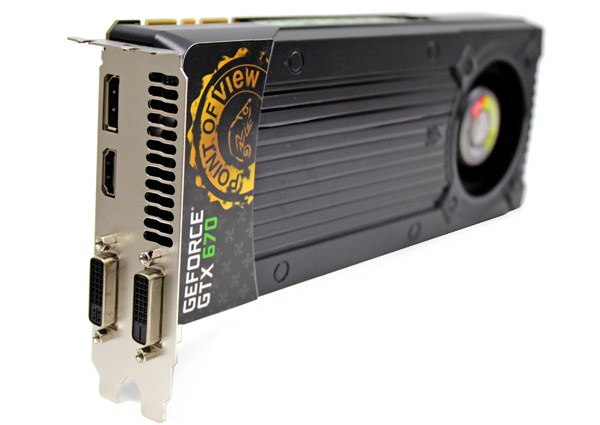
PoV/TGT GTX 670 Ultra Charged comes with two dual-link DVIs, but only one allows using analog VGA converters. VGA will require using the connector that’s in line with HDMI and DisplayPort connectors.
Nvidia has solved what was a thorn in its side for a while, which is the number of displays that can be used simultaneously. Kepler cards can now run up to four displays at the same time.
The GTX 670 Ultra Charged has two SLI connectors. The 301.42 driver adds Quad SLI support so users can harness the GTX 670 power to the max. Older drivers limited users to three-way SLI setups.