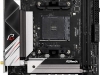
Intel has spilled the beans on two boards that are scheduled to launch along with Sandy Bridge E, Intel’s future performance processor.
We have already mentioned that Sandy Bridge E can end up with 3.6GHz clock that gets to 3.9GHz with the help of Turbo and the boards for it will naturally support and endorse overclocking. The top board will end up with DX70SI name and its currently being developed under the Siler codename. The board comes with LGA 2011 also known as Socket R support and it has two graphics card PCI 16X slots. Don't worry the board supports both Crossfire and SLI.
The board comes in ATX, of course and not in the already deceased BTX format. It comes with USB 3.0, Dual LAN, RAID and 8 DIMM slots. The runner up board is codenamed Thorsby and will launch under DX79TO (TO as in Thorsby, SI as in Siler ed.) and promises to be slightly different than Siler. It also has 2x16X PCIe slots for both Crossfire and SLI, 8 DIMM slots, Overclocking support, RAID and USB 3.0. It is no surprise that it comes in ATX format. The main difference in these thin specs we've seen is the TPM support, and to our best knowledge this should be the trusted platform module support, something that only a few ultra rich gamers, a key target audience might need.
It's safe to assume that chipset comes with X79, the first real successor to the venerable X58 chipset that lasted for years. .
Published in
Transportation
Siler and Thorsby are Sandy Bridge E boards

Quad channel memory with 8 slots
Tagged under