
Index
Page 3 of 6
Overclocking:
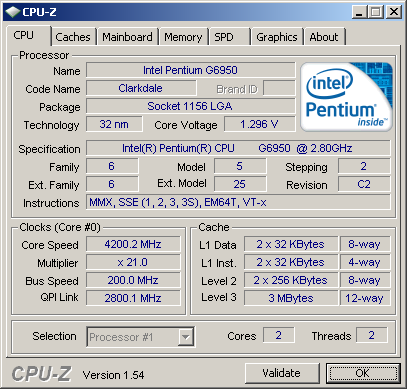
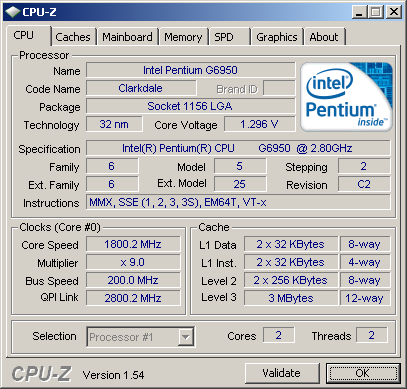
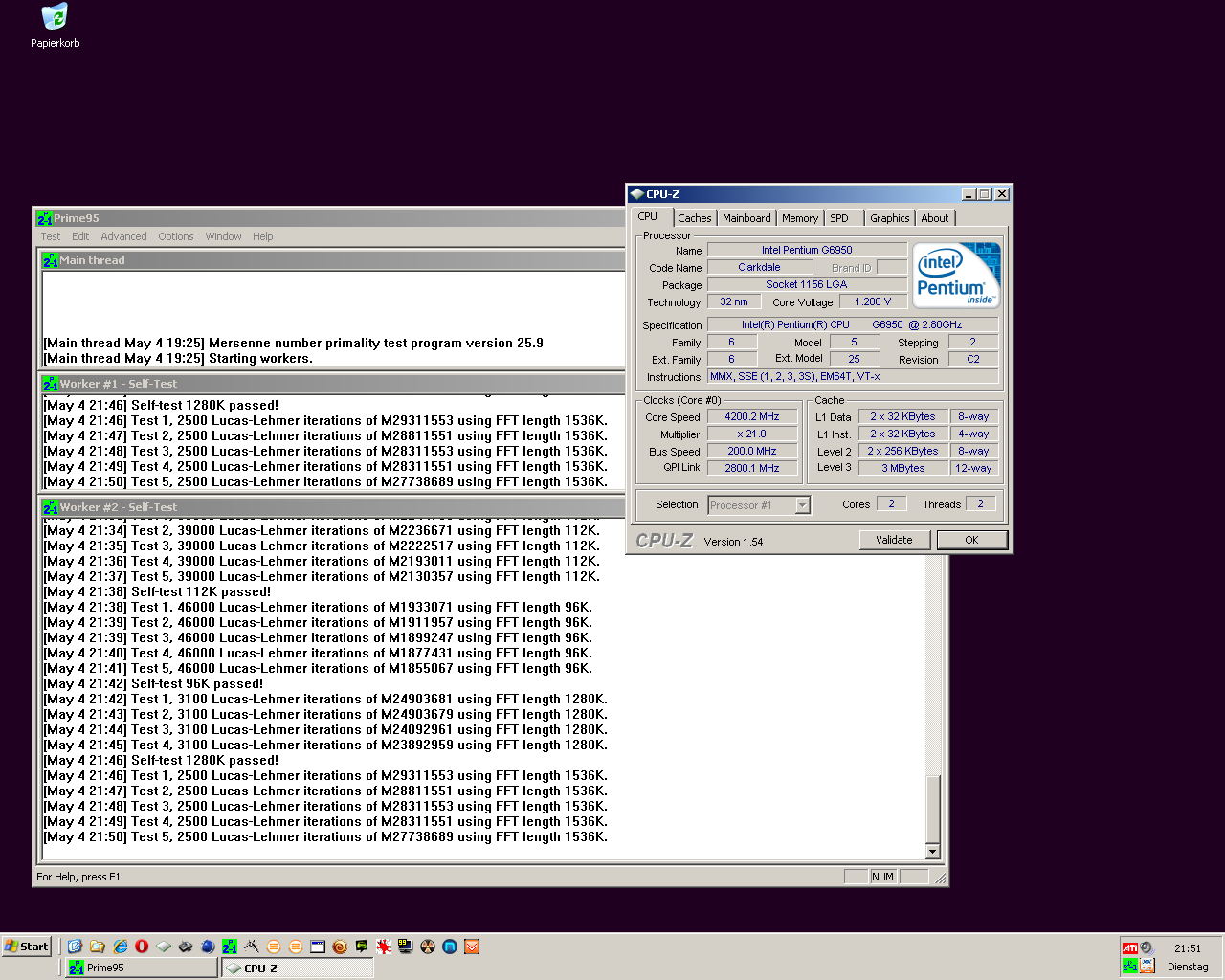
On our ASRock board setting the CPU 4.2GHz inside the BIOS worked without any problems. You may increase the VCore because the setting may not be prime-stable. Also you may be have better results with a graphics card, because you don't need to overclock the internal graphics. If you choose offset voltage increase instead of manual VCore the CPU can reduce voltages depending on load. Please keep in mind the ASRock H55M Pro motherboard is a low-end board, but the overclocking results are very good.
Intel G6950 @ 4.2GHz, Offset voltage increase +0.150V:
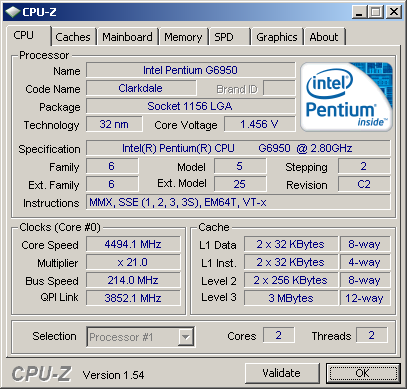
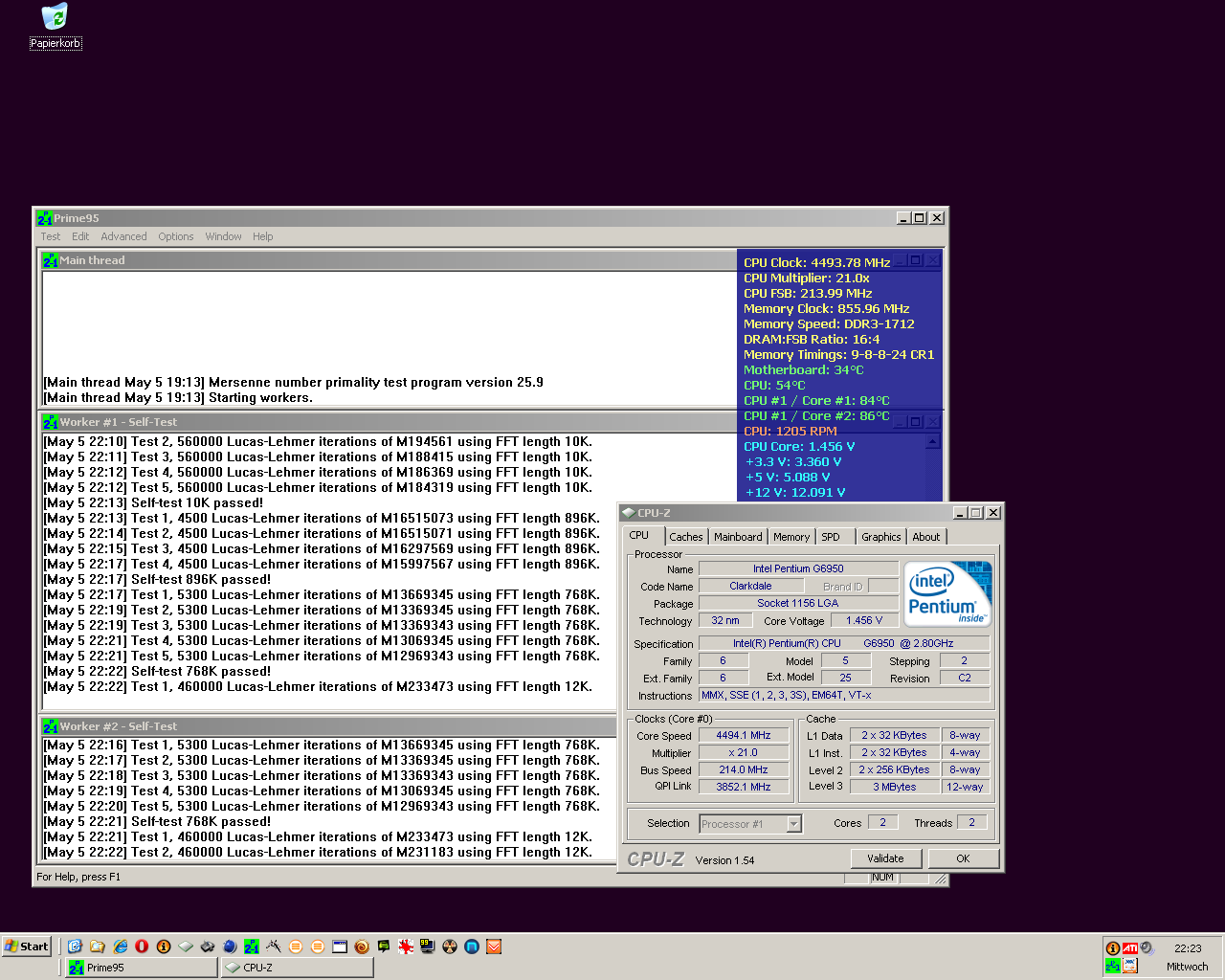
After adding a graphics card and disabling the internal graphics we even achieved nearly 4.5GHz. That's impressive, but as you can see, you need a huge voltage increase in our case 1.450V. Results will vary with each CPU, but because this is a CPU from a shop, it's a good indicator how high you can go with superior air-cooling or the quite cheap water-cooling solutions we reviewed here and here.
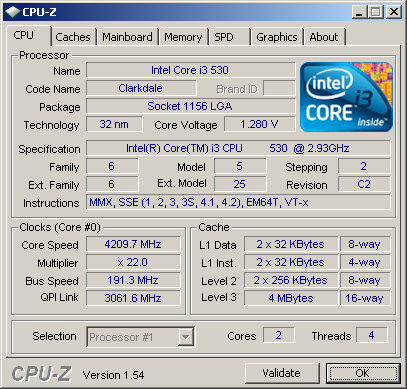
Intel i3-530 @ 4.2GHz, Offset voltage increase +0.1750V:
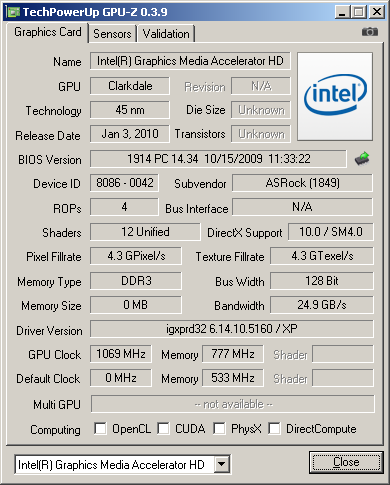
As you can see the internal graphics gets also a boost but requires +0.200V voltage increase which may be dangerous for the graphics core itself. Due to a BIOS bug or because we fried the i3-530 we could only get to 195MHz on the ASRock board, we will check out if the MSI board can do better.
Under-Voltaging:
Because the CPUs run very efficient at a VCore of about 1.100V we see no reason to attempt lowering the VCore itself. You could only shave off some 0.01V, so we think it's not worth the effort.