Featured Articles

Gainward GTX 780 3GB previewed

Gainward GTX 780 3GB previewed

The Gainward GTX 780 is now available priced at about US $649/€649, but we're hoping it will be available for a…

More...
GTX 780 available in US stores

GTX 780 available in US stores

The GTX 780, a trimmed down version of the Geforce Titan, is out and we wrote that almost a dozen…

More...
Newegg claims Shield comes on June 30

Newegg claims Shield comes on June 30

It is no secret that for the last few days you can pre-order Nvidia Shield, at least if you are based…

More...
Nvidia officially launches the GTX 780

Nvidia officially launches the GTX 780

Just as we wrote a couple of days ago, Nvidia has picked the 23rd of May as the official launch date…

More...
HIS iCooler Turbo HD 7790 reviewed

HIS iCooler Turbo HD 7790 reviewed

Today we’ll take a closer look at a factory overclocked HD 7790, courtesy of HIS. The HIS HD 7790 iCooler Turbo…

More...
Frontpage Slideshow | Copyright © 2006-2010 orks, a business unit of Nuevvo Webware Ltd.
Tuesday, 30 October 2007 04:21

Intel QX9650 reviewed [german]

Written by Eliot Kucharik
Image Image

Review: Penryn auf 4.30GHz übertaktet - luftgekühlt!


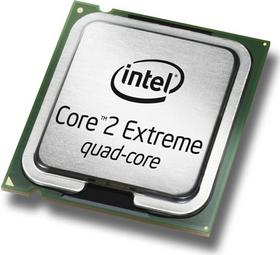
Vor rund zwei Wochen berichteten wir, daß wir einen QX9650 Penryn basierende Yorkfield CPU von Intel bekommen haben. Heute prüfen wir was dieser neue Quad-Core im Vergleich zur alten QX6850 Kentsfield leistet.
Image

Wir wollen uns nicht in zu vielen technischen Details verlieren, daher nur das Wichtigste zusammenfassen. Die neue CPU wird in einem 45nm Verfahren hergestellt mit einer Fläche von 214mm² und 820 Millionen Transistoren. Der "alte" Kentsfield hat 282mm² mit 582 Millionen Transistoren. Die gestiegene Anzahl der Transistoren ist allerdings auf die gestiegene Cache-Größe auf 12MB zurückzuführen. Jeder Dual-Core Block hat gemeinsamen Zugriff auf je 6MB. Der Penryn Cache ist jetzt 24-fach assoziativ, verglichen mit 16-fach assoziativ der jetzt verfügbaren Modelle.

Intel hat den "SSE" Befehlssatz aufgebohrt und fasst die neuen Befehle unter "SSE4" zusammen. Diese bringen Geschwindigkeisvorteile und einfachere Programmierung speziell für Videokodierung, wenn von der Software unterstützt. Die vielleicht wichtigste Neuerung ist das aktive Energiemanagement des Prozessors. Während heutzutage die meisten aktuellen Mainboards die übertaktete CPU nicht mit verminderter Spannung betreiben können, macht das die neue CPU von selbst. Wenn sie unbeschäftigt ist, verbraucht sie viel weniger Energie, egal ob vom BIOS unterstützt oder nicht.


  • «
  •  Start 
  •  Prev 
  •  1 
  •  2 
  •  3 
  •  4 
  •  5 
  •  6 
  •  7 
  •  8 
  •  9 
  •  10 
  •  Next 
  •  End 
  • »
(Page 1 of 10)
Last modified on Thursday, 01 November 2007 04:32

Eliot Kucharik

E-mail: This e-mail address is being protected from spambots. You need JavaScript enabled to view it
blog comments powered by Disqus

To be able to post comments please log-in with Disqus


Facebook activity

Latest Commented Articles

Recent Comments