
Featured Articles

Nvidia GTX 770 spec is out

Nvidia GTX 770 spec is out

In addition to the GK110 based Nvidia Geforce GTX 780, we managed to get some details regarding the GK104-based GTX 770…

More...
Nvidia Geforce GTX 780 detailed

Nvidia Geforce GTX 780 detailed

We managed to confirm the full spec of the upcoming Nvidia Geforce GTX 780 graphics card as well as some performance…

More...
AMD shares take rollercoaster ride

AMD shares take rollercoaster ride

In the last 52 weeks AMD was on a rollercoaster ride, with prices ranging from $1.81 to $6.46. Yesterday it closed…

More...
HIS iCooler Turbo HD 7790 reviewed

HIS iCooler Turbo HD 7790 reviewed

Today we’ll take a closer look at a factory overclocked HD 7790, courtesy of HIS. The HIS HD 7790 iCooler Turbo…

More...
Kingston DataTraveler Ultimate 3.0 Generation 3 (32GB) reviewed

Kingston DataTraveler Ultimate 3.0 Generation 3 (32GB) reviewed

High capacity USB drives have become commonplace a while ago, but although some memory outfits are peddling huge drives, up…

More...
Frontpage Slideshow | Copyright © 2006-2010 orks, a business unit of Nuevvo Webware Ltd.
Friday, 05 February 2010 15:11

SilverStone intros HDDBoost

Written by Fudzilla staff


Image

Up to 70 percent faster SSD/HDD hybrid drive


SilverStone
has reinvented the hybrid drive concept with a rather interesting product dubbed HDDBoost.

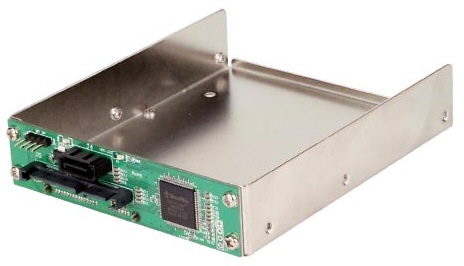
The contraption is not much to look at, but SilverStone claims it is a clever piece of kit that can boost HDD performance by up to 70 percent. Basically it allows users to connect just about any 2.5-inch SSD to 3.5-inch HDD, thus combining the best of both worlds - SSD seek times and HDD capacities.
Image

It creates a mirror of front end data of the HDD on the SSD and allows the system to access them in less than a millisecond. However, the rest of the data is still read from the HDD, but in spite of this SilverStone claims it can accelerate the drive by up to 70 percent, depending on the speed of the SSD. It all sounds pretty nice, provided it works as advertised.

Best of all, it doesn't take a rocket scientist to put it all together. There's no need for any special software or drivers, as the hardware apparently takes care of everything. The price is also quite tempting, as it costs just €37, or around $50. However, it is currently available only in Japan, but if it proves successful we'll probably see it elsewhere.

You can check it out here.
Last modified on Friday, 05 February 2010 15:13

Fudzilla staff

E-mail: This e-mail address is being protected from spambots. You need JavaScript enabled to view it
blog comments powered by Disqus

To be able to post comments please log-in with Disqus


Facebook activity

Latest Commented Articles

Recent Comments