Featured Articles

Nvidia GTX 770 spec is out

Nvidia GTX 770 spec is out

In addition to the GK110 based Nvidia Geforce GTX 780, we managed to get some details regarding the GK104-based GTX 770…

More...
Nvidia Geforce GTX 780 detailed

Nvidia Geforce GTX 780 detailed

We managed to confirm the full spec of the upcoming Nvidia Geforce GTX 780 graphics card as well as some performance…

More...
AMD shares take rollercoaster ride

AMD shares take rollercoaster ride

In the last 52 weeks AMD was on a rollercoaster ride, with prices ranging from $1.81 to $6.46. Yesterday it closed…

More...
HIS iCooler Turbo HD 7790 reviewed

HIS iCooler Turbo HD 7790 reviewed

Today we’ll take a closer look at a factory overclocked HD 7790, courtesy of HIS. The HIS HD 7790 iCooler Turbo…

More...
Kingston DataTraveler Ultimate 3.0 Generation 3 (32GB) reviewed

Kingston DataTraveler Ultimate 3.0 Generation 3 (32GB) reviewed

High capacity USB drives have become commonplace a while ago, but although some memory outfits are peddling huge drives, up…

More...
Frontpage Slideshow | Copyright © 2006-2010 orks, a business unit of Nuevvo Webware Ltd.
Tuesday, 08 December 2009 20:24

LGA 1366 vs. 1156 comparison tests - 3 two vs three channels

Written by Eliot Kucharik

ImageImage

Review: Socket 1366 is obsolete


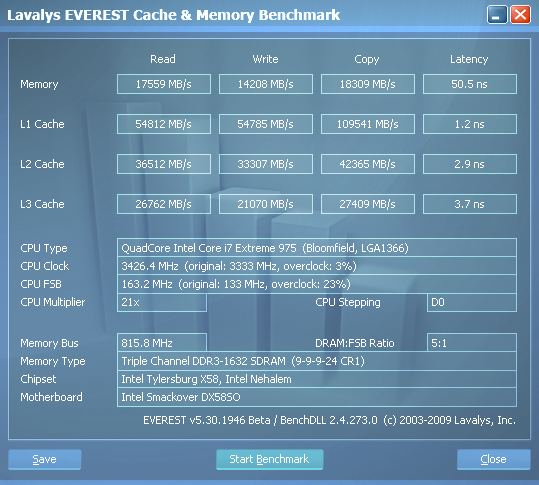
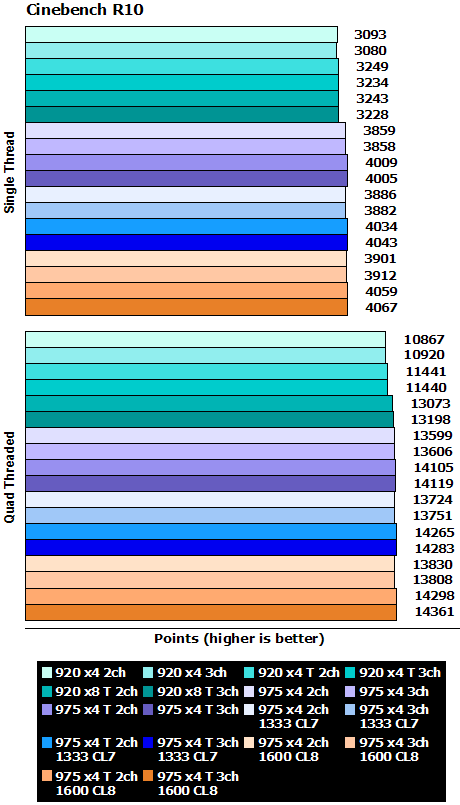
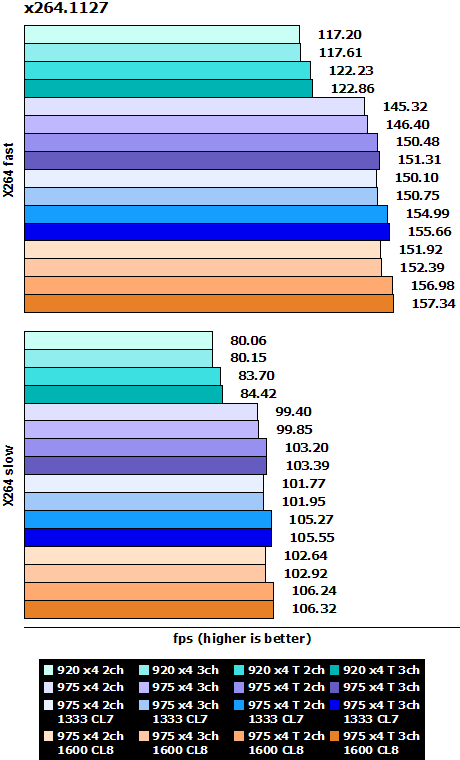
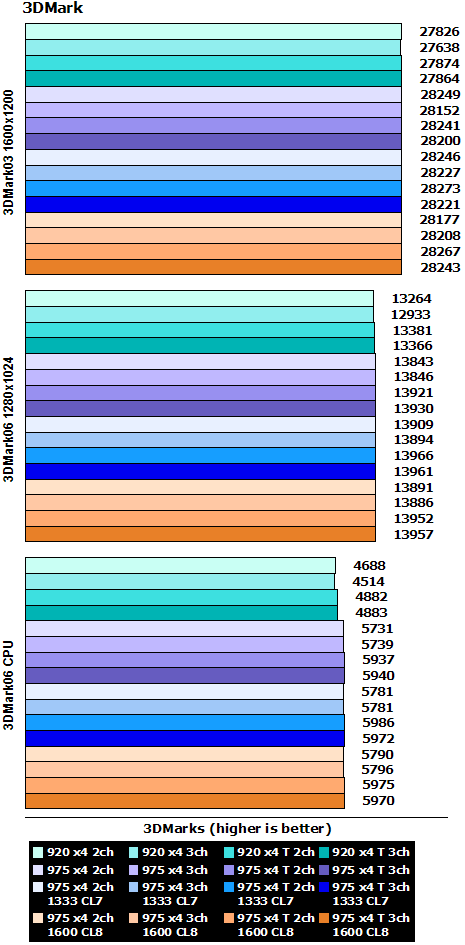
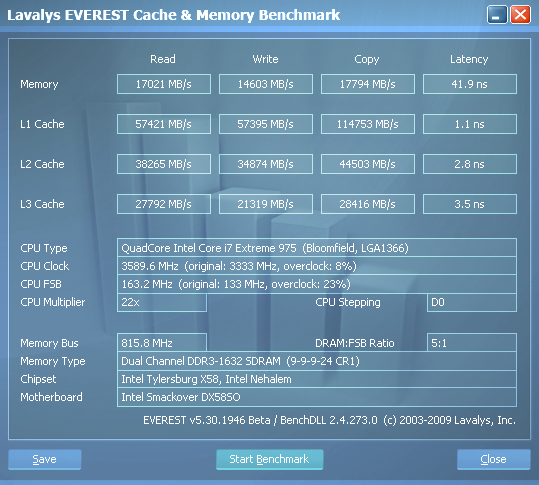
As we can see, the differences between two channels and three channels are not as big as you might think. Also the latencies are much lower with only two channels populated. Because the Intel board was not able to run with 1600MHz at CL8, we switched to the MSI Eclipse SLI which did work well. It is not always possible to achieve higher memory speeds on the 1366 platform, because it is board and CPU dependent. Some CPUs may work better, while others will not. Socket 1156 CPUs are much easier to overclock and also can run higher memory speeds without too many problems. Also the performance increase comes mostly from the overclocked QPI.

two channels, 1600MHz:
Image

three channels, 1600MHz:
Image


Lets test with some applications:

Image

Image

Image

Image


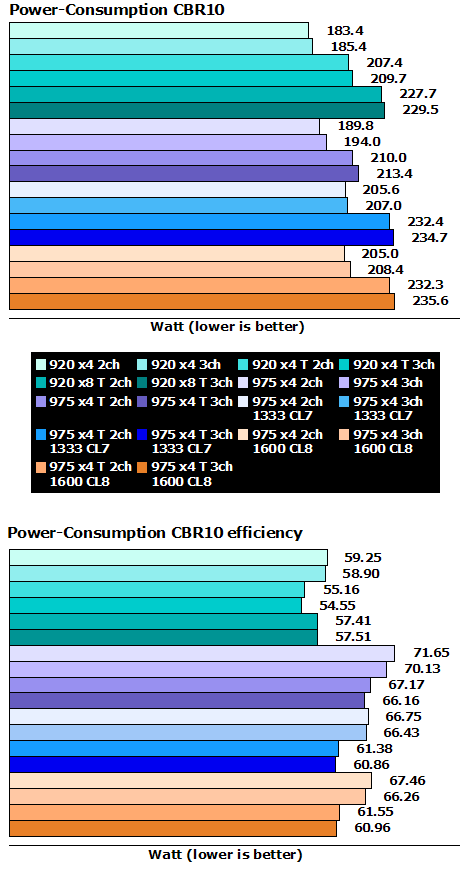
Let's see how two and three channels setups do in power-consumption tests. Please note that the MSI board which we used for 1600MHz CL8 does consume much less power compared to the Intel board. Also, you can see if you active the turbo mode on the 1366 platform, it gives you only a slight performance enhancement, but it does increase power consumption a lot. Also two channels do consume less power and make this configuration also more efficient.
Image


(Page 3 of 5)
Last modified on Tuesday, 08 December 2009 20:53
blog comments powered by Disqus

To be able to post comments please log-in with Disqus


Facebook activity

Latest Commented Articles

Recent Comments