Index
Page 3 of 8
Layout:
ASUS did a nice job with the layout. On all ASUS boards we have tested so far, ASUS used an 8-pol EPS CPU-power connector. This time they stuck with an standard "P4" 4-pol 12V connector, which is a drawback when huge loads are required, such as quad-core CPUs not based on Penryn and high CPU overclocks. We would also like to swap the position of the connector with the CPU-fan connector, because this would avoid some of the cable mess in small cases.
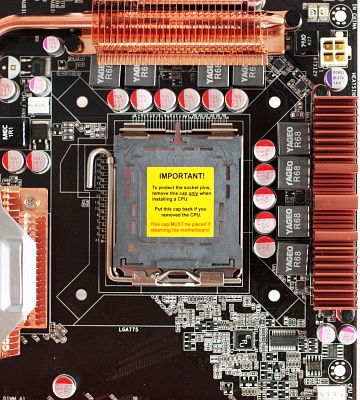
The VRM is an analog 8-phase design, compared to the P5K and Blitz series ASUS enhanced the design, which yields in lower power-consumption. The heatpipe keeps the temperatures in safe limits all times. Due the height of the Northbridge-Cooler this board has limited compatibility to some CPU-coolers. We could not install our Scythe reference cooler the way it was supposed to be installed, we needed to rotate it 90° which yields a 2-3"C temperature increase. Check the Webpages of the cooler manufacture for compatiblity issues.
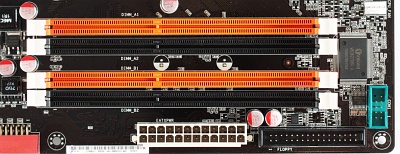
The memory slots are quite close to the primary PCIe x16 slot, so you need to fiddle with your modules when replacing them while a large graphics card is installed, but it's manageable. As usual, the 24-pin power and floppy connectors are located beneath.
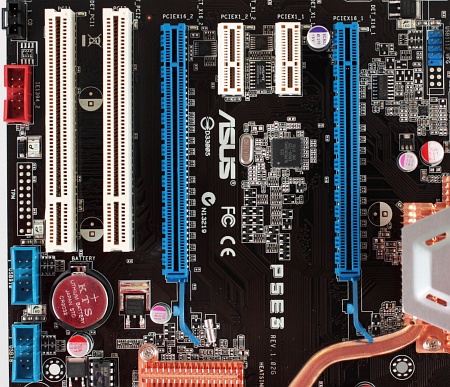
The slots are configurated okay, but not very well. The first drawback is that both PCIe x16 slots are only usable for x16 graphics cards; you can't install a PCIe x8 SATA RAID controller or a PCIe x1 TV-card. While high-end users will buy cards with dual-slot coolers or "silent" enthusiasts will swap the graphics card cooler for something better using 1.5 slots, the slots left from any PCIe x16 should be left "blank." One PCIe x1 slot would fit nicely between primary PCIe x16 slot and the heatpipe and any other slot should be PCI.
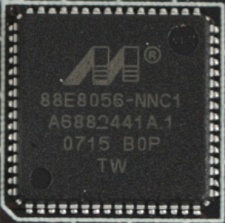
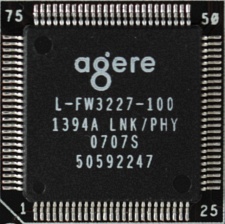
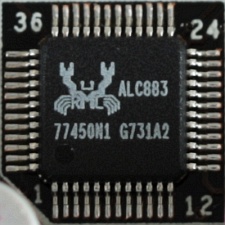
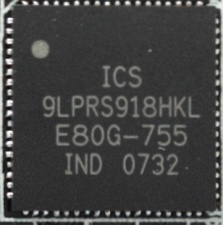
Network connectivity is provided by one Marvell PCIe chip, while an Agere chip provides two Firewire-slots, one on the back panel, one header on the board. Because this board is a "standard" edition, it doesn't feature a Supreme FX sound card nor an Analog Device soundchip onboard, so the ALC883 will have to do, or you can install an soundcard. The ICS clock generator is located between the PCIe x16 slots.
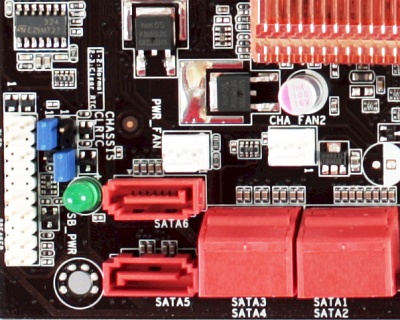
The SATA and PATA connectors are, as usual, on the left edge of the board. Four SATA connectors are angulated, so a second large graphics card will fit above them. This board does not feature sophisticated post diagnose. Only a big awful looking LED indicates that the mainboard is powered, and no more information while booting is available.