Featured Articles

Intel plans Haswell refresh in Q2 2014

Intel plans Haswell refresh in Q2 2014

Intel has been executing its tick tock strategy flawlessly since January 2006 and now there is some indication that we might…

More...
Xbox One demoed running GTX card

Xbox One demoed running GTX card

It looks like the Xbox One just cannot catch a break. We have stumbled upon a report claiming that Xbox One…

More...
Haswell Pentium and Core specs surface

Haswell Pentium and Core specs surface

Haswell is out and now we have the complete specs for Intel’s first batch of fourth generation Core parts, as well…

More...
EVGA GTX 770 ACX 2GB previewed

EVGA GTX 770 ACX 2GB previewed

Nvidia is hoping that the Geforce GTX 770 will be a very popular product, and EVGA obviously share this view, as…

More...
Gainward GTX 770 Phantom reviewed

Gainward GTX 770 Phantom reviewed

Gainward has now officially unveiled its custom version of the Geforce GTX 770, the Gainward GTX 770 Phantom. Based on the…

More...
Frontpage Slideshow | Copyright © 2006-2010 orks, a business unit of Nuevvo Webware Ltd.
Monday, 29 October 2007 23:39

Intel QX9650 reviewed [updated]

Written by Eliot Kucharik

Image Image

Review: Penryn goes up to 4.30GHz with air cooling


German version available here.

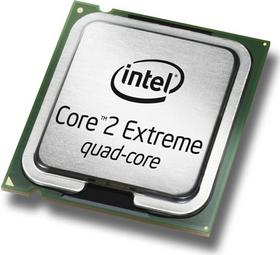
Two weeks and some days ago we informed you that we received the new QX9650 Penryn-based Yorkfield CPU from Intel. Today, we compare the new quad-core with the old QX6850 Kentsfield and check out what the new CPU has to offer.
Image

We will not go into the technical details too extensively. The new CPU is produced using the new 45nm process with a die-size of 214mm² and 820 million transistors. The old Kentsfield is 282mm² with 582 million transistors. Obviously, the increased transistor count comes from its massive 12MB cache, as each dual-core CPU die has its own shared 6MB. The new cache is now 24-way associative, compared to the 16-way associative cache of the older models.

Intel also added an extension to the SSE instruction set called "SSE4" which will help video algorithms work much faster; that is, of course, only if supported by the software. The most important changes are the power-saving functions inside the CPU. While most mainboard BIOSes will not support VCore reduction of the CPU when overclocked, the new family can power down on its own. If the CPU is idle, it will go into idle mode regardless of the BIOS. 


  • «
  •  Start 
  •  Prev 
  •  1 
  •  2 
  •  3 
  •  4 
  •  5 
  •  6 
  •  7 
  •  8 
  •  9 
  •  10 
  •  Next 
  •  End 
  • »
(Page 1 of 10)
Last modified on Thursday, 01 November 2007 04:28
blog comments powered by Disqus

To be able to post comments please log-in with Disqus


Facebook activity

Latest Commented Articles

Recent Comments